If you have ever watched your child hum a tune while stacking blocks or clap along to a playful song, you have seen the magic of play based learning in action. Young children learn best when they are exploring, imagining, building, and creating.
At a play based learning preschool, play is more than entertainment. It is a powerful way for children to develop language, coordination, creativity, and social confidence. When music and art are combined with hands-on play, learning becomes joyful and meaningful.
Families searching for play based learning in Cockeysville, Maryland often discover that this approach helps children feel more confident, curious, and ready for kindergarten.
Families in nearby communities can also explore our sister school serving the area.
What Is Play Based Learning?
Play based learning is an educational approach that encourages children to learn through exploration and creative activity. Teachers intentionally design classroom environments filled with materials that invite curiosity, imagination, and collaboration.
Instead of focusing only on worksheets or structured instruction, children learn through activities such as building, pretending, creating art, and solving problems together.
In a strong play based classroom, you will often see:
- Consistent daily routines that help children feel secure
- Learning centers such as blocks, dramatic play, art, science, and music
- Teachers guiding play with thoughtful questions and encouragement
- Daily outdoor play and physical movement
- Opportunities for social interaction and teamwork
Through these experiences, children naturally develop early math, literacy, and problem-solving skills.
Montessori vs. Play Based Learning
Parents researching preschool programs often compare Montessori education and play based learning. Both approaches value hands-on learning and support the whole child, but they differ in structure.
Montessori Programs
Montessori classrooms typically use specialized learning materials arranged in a carefully structured environment. Children choose activities independently and work for extended periods of focused time.
Play Based Learning Programs
Play based classrooms offer a wider variety of open-ended materials and encourage more collaborative exploration. Teachers guide children through learning centers and small group activities while allowing flexibility and creativity.
For many families in Cockeysville, play based learning feels like a natural fit because it reflects how young children learn through curiosity, imagination, and social interaction.
The Role of Music in Play Based Learning
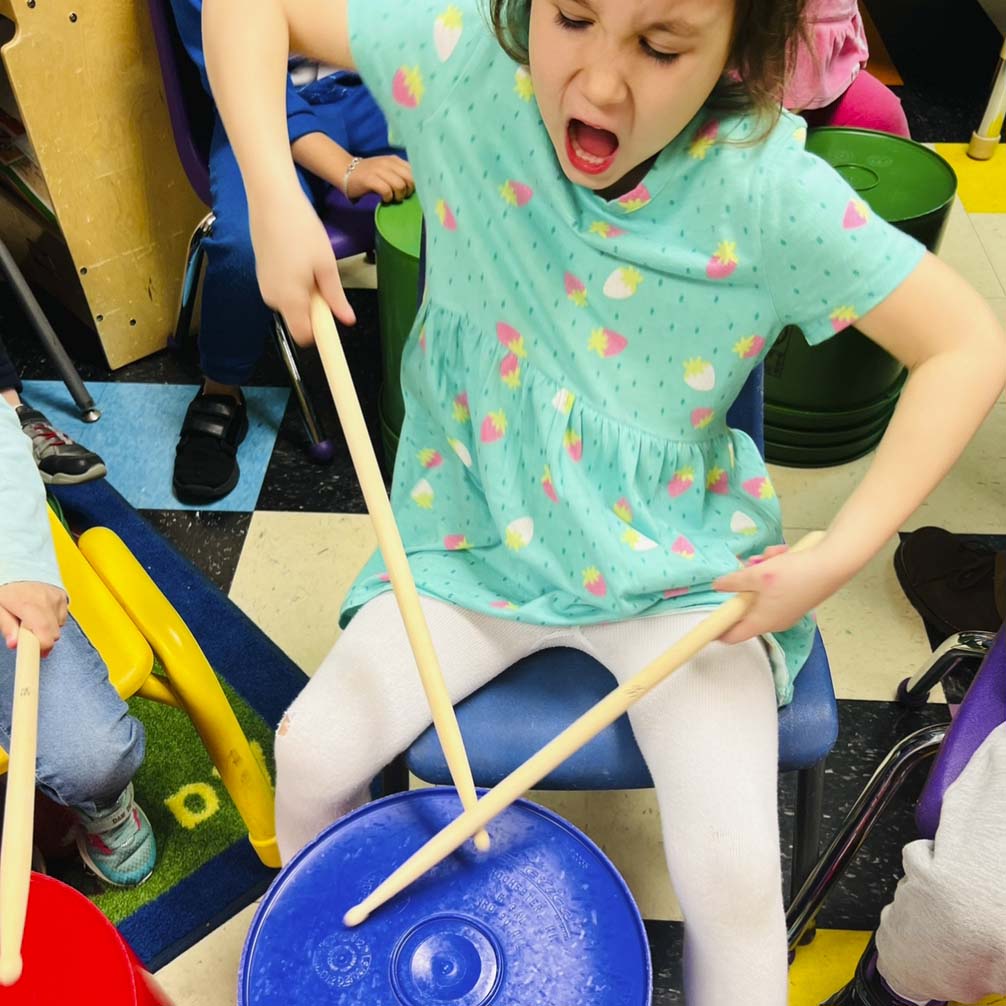
Music plays a powerful role in play based learning classrooms. Songs, rhythm, and movement help children stay engaged while strengthening important developmental skills.
In a play based environment, music may be used for:
- Morning welcome songs that build social connections
- Rhythm games that introduce counting and patterns
- Movement activities that support coordination
- Musical storytelling that encourages imagination
- Transition songs that help children move smoothly between activities
Music helps transform everyday classroom moments into engaging learning opportunities.
The Benefits of Play Based Learning for Preschoolers
Research shows that play based learning supports early childhood development in several key ways.
Language Development
Children expand their vocabulary and communication skills through conversation, storytelling, and imaginative play.
Memory and Attention
Songs, rhythm patterns, and interactive games strengthen listening and memory skills.
Motor Skills
Building, dancing, drawing, and instrument play support both fine and gross motor development.
Social Skills
Group play encourages cooperation, sharing, and problem-solving.
Emotional Confidence
Children learn to express feelings, navigate challenges, and develop independence.
These skills are essential for helping children transition successfully into kindergarten.
How Play Based Learning Looks in the Classroom
In a preschool that focuses on play based learning, the day is filled with opportunities for children to explore and interact.
A typical day may include:
Morning Circle
Children gather for welcome songs, movement activities, and interactive discussions that build community.
Learning Centers
Children rotate through activity areas such as blocks, dramatic play, art, music, and sensory exploration.
Small Group Learning
Teachers introduce early math, language, and science concepts through games and hands-on projects.
Outdoor Exploration
Outdoor play supports physical development and allows children to practice teamwork and creativity.
Quiet Time and Reflection
Calming music and storytelling help children relax and prepare for the next activity.
Each moment is carefully designed to encourage curiosity and discovery.
How to Choose a Play Based Preschool in Maryland
Families searching for play based learning in Cockeysville can use a few simple guidelines when visiting preschool programs.
During your tour, look for:
- Active learning centers where children are exploring and collaborating
- Teachers interacting with children at eye level
- Music, art, and movement integrated into daily activities
- Safe outdoor play spaces and time for physical activity
- A welcoming environment that encourages curiosity and creativity
You should also confirm that the program is a licensed daycare with strong safety practices and open communication with families.
Families who live closer to neighboring communities can also explore nearby programs.
Why Play Based Learning Builds School Readiness
One of the greatest advantages of play based learning is that it prepares children for kindergarten while preserving the joy of childhood.
Through play, children practice important academic and life skills such as:
- Recognizing letters and sounds
- Understanding numbers and patterns
- Working collaboratively with peers
- Solving problems independently
- Following routines and instructions
These experiences help children develop confidence and independence, making the transition to elementary school smoother.
See Play Based Learning in Action
The best way to understand play based learning is to see it in a real classroom environment.
During a preschool tour, families can observe:
- Children collaborating in learning centers
- Teachers guiding playful learning activities
- Music and movement integrated throughout the day
- Outdoor exploration and creative play
Parents often notice how engaged and confident children become when learning feels like play.
Families exploring play based learning in Cockeysville, Maryland are encouraged to visit classrooms, meet teachers, and ask questions about curriculum and daily routines.
A joyful, play-filled preschool environment can help children develop the curiosity, confidence, and social skills they need to thrive in school and beyond.